
Scars affect us in seen and unseen ways.
More than surface-level, scars hold memory in the tissue.
Scars can cause pain, numbness, swelling, and limited mobility at the scar site or distant places in the body. The way scar tissue disrupts body functioning is by compressing lymphatic vessels, binding to fascia, and reducing blood and nerve flow.
Depending on where the scar is located this can cause a myriad of issues. One example is scar tissue created by chest surgery including gender affirmation surgery, breast augmentation, mastectomy or another procedure.
Chest surgery can create:
- Neck, shoulder, and upper back pain
- Restricted lung expansion causing fatigue and shortness of breath
- Arm tingling / weakness
- Emotional tension held in the chest manifesting as grief and anxiety
Acupuncture provides pain and symptom relief by releasing scar tissue, whether from injury or surgery. Clearing adhesions, improving circulation, calming nerve irritation, acupuncture allows the body to reintegrate areas that have been cut, injured, or held in tension for years.
Not just for post-operative healing, acupuncture plays a supportive role in every stage of surgery related scars helping the body prepare for surgery, recover more smoothly afterward, and manage pain or stress along the way.
In some conditions, Chinese medicine can prevent the need for surgery by improving circulation, reducing inflammation, releasing muscle tension, and modulating the nervous system. Acupuncture, herbs, and bodywork restore mobility and function in tissues that might otherwise be considered for surgical intervention. So if you’re facing surgery and wondering if there’s another way, we can discuss your specific case and explore what’s possible.
Gender-Affirming Surgery
Over the years, I’ve had the privilege of supporting transgender and gender-diverse individuals through every stage of gender-affirming surgery from preparation, recovery, and long-term integration. While the body heals from procedures like top or bottom surgery, there can be physical challenges such as scar tissue, nerve changes, pelvic tension, fatigue, postural challenges, and restricted breathing.
The operation itself can re-open old psychological wounds such that healing also unfolds on deeper levels. Sometimes there’s unexpected grief, disorientation, or emotional release, even in the midst of profound relief and joy.

My work helps to heal the full spectrum of post-operative issues – releasing physical restriction, calming the nervous system, and holding space for the complexity of becoming more fully at home in one’s body.
Before
Two months post surgery with bi-weekly acupuncture. image used with patient permission.
After
Six months post surgery with bi-weekly acupuncture. Image used with patient permission.
What you can do to heal scars at home
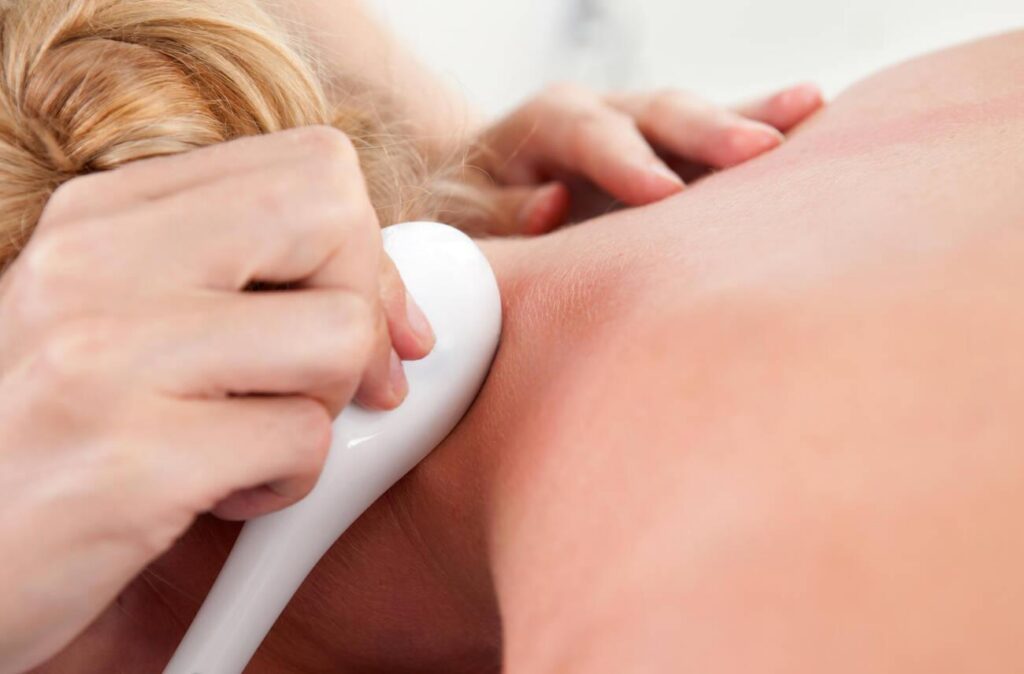
At-home techniques like “Gua Sha” (scraping petichiae- named for the red dots that can arise with stroking) can improve scar mobility, local fluid flow, and a therapeutic connection to the scar area for psychological integration.
Using a smooth-edged tool, like a Chinese soup spoon, over a lubricant such as shea butter, you can make a daily practice of firmly stroking the scar area for a few minutes at a time to help soften adhesions and support tissue remodeling. If you’ve had recent surgery await surgeon clearance (usually 6-8 weeks post-surgery) to begin gentle gua sha treatment.
While this can be quite helpful, and is often part of the at-home care I suggest to patients, deeper and more distant effects of scar adhesions often require more comprehensive treatment with acupuncture.
